
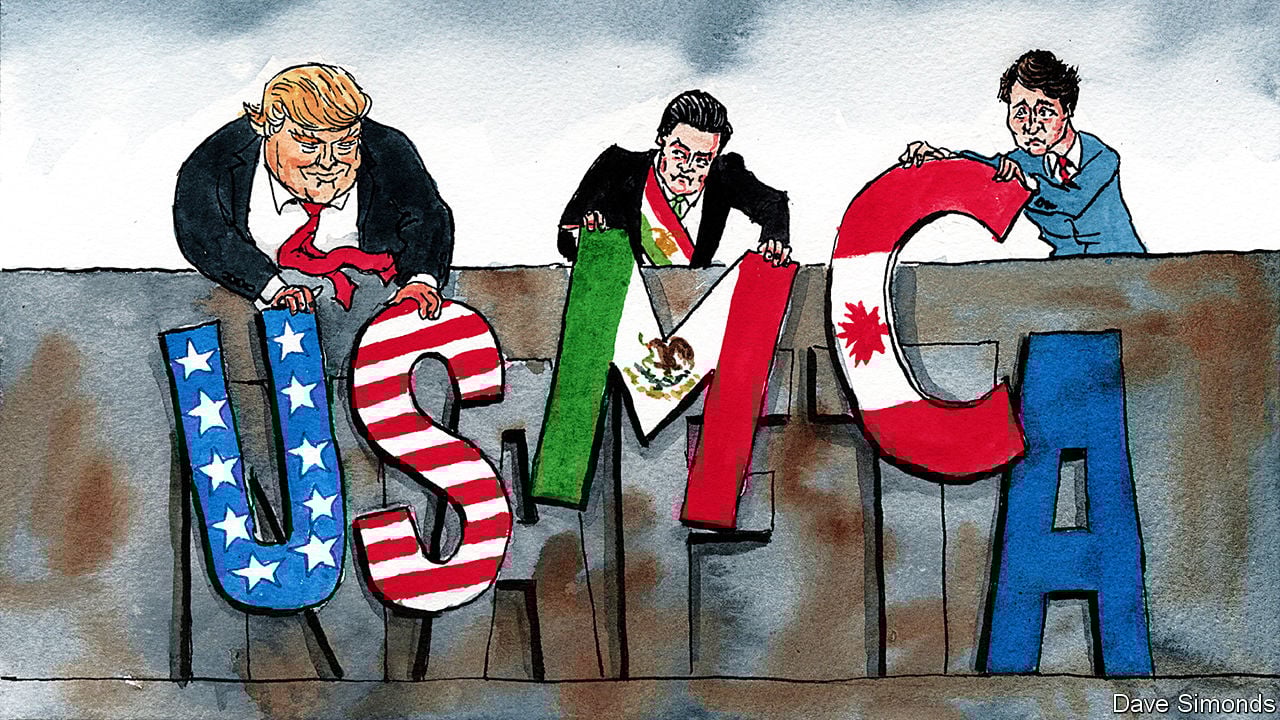
Trade relations between the United States and Canada have historically been stable, yet they have remained vulnerable to political shifts and leadership styles. The renegotiation of NAFTA into the United States–Mexico–Canada Agreement (USMCA) during Donald Trump’s presidency marked a major shift in North American trade dynamics. Political actors, including Ontario Premier Doug Ford, demonstrated how subnational leadership can influence cross-border economic relations. This article offers a political risk assessment of the USMCA framework, with particular attention to tariff disputes and policy uncertainty in US–Canada trade relations.
Donald Trump’s Trade Strategy and Canada
Donald Trump pursued an openly protectionist trade strategy, frequently arguing that existing trade agreements placed American workers at a disadvantage. Canada, despite its status as a close ally, was not exempt from this approach. The introduction of tariffs on Canadian steel and aluminum, justified on national security grounds, surprised policymakers in Ottawa as well as provincial leadership. These measures heightened uncertainty for Canadian exporters and disrupted integrated supply chains across North America.
From a political risk perspective, the use of trade restrictions as a bargaining instrument increased policy volatility—one of the most significant risk factors for investors and cross-border firms. Companies operating under NAFTA encountered regulatory instability, resulting in higher operational costs and postponed investment decisions.
Role of USMCA in Managing Trade Risks
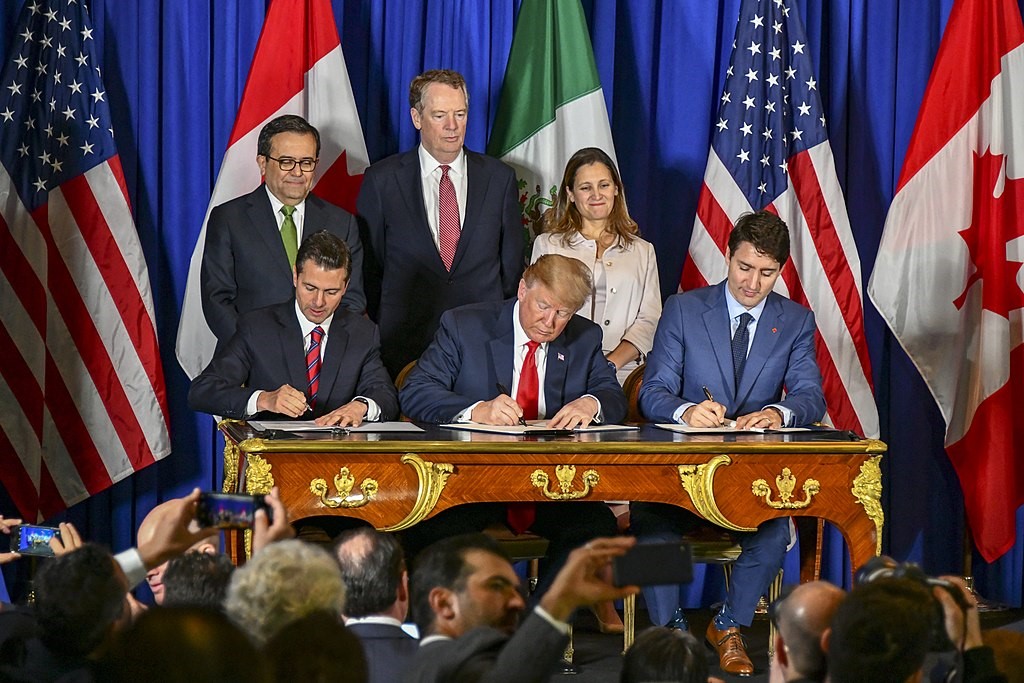
The USMCA was negotiated to replace NAFTA and to address U.S. concerns related to trade imbalances, labor standards, and the relocation of manufacturing activities. While the agreement maintained tariff-free trade for most goods, it introduced more stringent rules of origin, particularly affecting the automotive industry.
For Canada, the new framework helped reduce long-term uncertainty but did not completely eliminate exposure to political risk. The agreement underscored the reality that trade policy during the Trump administration was shaped largely by domestic political pressures rather than purely economic considerations. As a result, even under USMCA, the possibility of unilateral trade actions continued to pose a challenge for Canadian policymakers and businesses.
Doug Ford and Subnational Trade Diplomacy
Doug Ford, as Premier of Ontario—Canada’s industrial heartland—played a significant role in responding to trade pressure from the United States. Ontario’s economy is deeply integrated with U.S. manufacturing networks, particularly in the automotive and steel sectors. Ford actively engaged with American governors, business leaders, and policymakers to highlight the mutual economic costs associated with tariff measures.
The involvement of Ontario’s premier illustrates how subnational actors can help mitigate political risk through economic diplomacy. These efforts reinforced the perception of Canada not as a rival, but as a partner within shared North American supply chains. More broadly, this episode demonstrates that political risk within the USMCA framework is managed not only at the federal level but also through coordinated subnational engagement.
Political Risk Analysis: Key Dimensions
A comprehensive political risk assessment of trade relations between Canada and the United States during the Trump era reveals three key dimensions:
- Policy Volatility
Trade decisions during this period were frequently abrupt and driven by political considerations, significantly increasing uncertainty for businesses and investors. - Institutional Constraints
Although the USMCA established formal mechanisms for dispute resolution, it did not fully restrict executive authority over the imposition of trade measures. - Leadership-Driven Risk
The personalization of trade policy during the Trump administration meant that bilateral relations could deteriorate rapidly, even in the presence of strong underlying economic fundamentals.
Long-Term Implications
Although the Biden administration has adopted a more cooperative trade posture, the legacy of tariff disputes during the Trump era continues to shape Canadian trade strategy. Canada has become increasingly cautious, actively diversifying its trade partnerships and reinforcing domestic industries in order to reduce vulnerability to political shifts in the United States.
While the USMCA continues to function as a stabilizing institutional framework, the previous period illustrated that even well-established trade agreements can remain exposed to leadership-driven political risk.
Conclusion
The interaction between trade institutions and political leadership during the USMCA negotiations demonstrates how even long-standing economic partnerships can be reshaped by shifting political priorities. The tariff disputes between Canada and the United States during the Trump administration serve as a clear case study in political risk, illustrating how unpredictability, protectionist impulses, and domestic political pressures can override established trade norms. For policymakers and investors alike, this period underscores the necessity of systematic political risk analysis when navigating international trade relationships.
1 thought on “USMCA, Doug Ford, and Donald Trump: 3 Critical Risks in Canada–US Trade Relations”