Introduction
Education is one of the most powerful tools for improving human life. It gives people knowledge, practical skills, confidence and the ability to make informed decisions. In Pakistan, however, access to education remains closely connected to the financial circumstances of a family. While some children attend well-equipped schools and receive additional academic support at home, others struggle to obtain basic textbooks or reach the nearest classroom. For families living on limited incomes, education can become difficult to prioritise when food, rent and healthcare are immediate concerns.
Poverty affects education in several ways. It prevents children from enrolling in school, increases the likelihood of dropping out and reduces the quality of learning for those who remain enrolled. At the same time, limited education makes it harder for individuals to find secure employment and improve their living standards. These two problems reinforce each other, creating a cycle that can continue across generations. Addressing this challenge requires more than building schools; it requires financial assistance, better teaching, social protection and equal opportunities for disadvantaged communities.
The situation in Pakistan
UNICEF estimates that approximately 25.1 million Pakistani children between the ages of five and sixteen are out of school, representing about 35 per cent of children in this age group (UNICEF, n.d.). UNESCO (2026) also identifies household poverty, the cost of foregoing children’s work and inadequate educational facilities as important barriers to school participation. These figures demonstrate the scale of educational exclusion, although not every out-of-school child is absent because of poverty alone.
The problem is visible in rural villages, urban informal settlements and remote districts. A child in a large city may live near several schools but still be unable to afford transport or supplies. In a remote village, a nearby school may not provide classes beyond the primary level. Such differences mean that policies must respond to local needs rather than assume that every disadvantaged household faces the same difficulties. Pakistan’s constitutional commitment under Article 25-A to free and compulsory education for children aged five to sixteen provides a strong foundation, but the practical delivery of this right remains a major challenge.
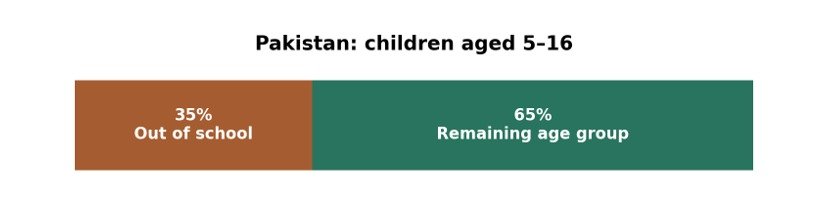
Figure 1. School participation estimate. Source: UNICEF Pakistan (n.d.); author-created graphic.
The hidden cost of schooling
Even when public schools do not charge tuition fees, education is not always completely free for families. Parents may need to purchase uniforms, notebooks, stationery, shoes and schoolbags. Transport, examination-related expenses and other incidental costs can add to the household budget. These expenses become particularly difficult when several children attend school at the same time or when a family’s earnings are irregular.
A daily-wage worker, for example, may experience periods without employment. An unexpected medical bill or an increase in food prices can leave little money for school supplies. A child may miss classes because a uniform needs replacing or because transport is no longer affordable. Repeated absences can create gaps in understanding, making lessons increasingly difficult. Eventually, the child may leave school altogether. The problem is therefore not simply a lack of motivation; it is often the result of financial insecurity and limited access to reliable support.
Child labour and the pressure to earn
Child labour is another important link between poverty and educational exclusion. In households where adult earnings are insufficient, children may be expected to contribute through agricultural work, workshops, domestic service, street vending or other activities. Some children combine work and schooling, but long working hours can reduce the time and energy available for study. Others leave school entirely to support their families.
The immediate income earned by a child may appear necessary for household survival, yet leaving education early can reduce future earning opportunities. Children who miss basic reading, mathematics and communication skills may have fewer choices when they become adults. They can also be more vulnerable to unsafe working conditions and exploitation. Efforts to prevent harmful child labour should therefore be combined with income support for families, accessible schools and flexible learning opportunities. Punishing families without addressing the economic pressures behind their decisions is unlikely to produce lasting improvements.
Poverty and girls’ education
Girls from low-income families can face overlapping financial and social barriers. In some households, limited resources are directed towards boys’ schooling because parents expect sons to become future earners. Girls may be required to care for younger siblings, perform household chores or leave school when they reach adolescence. Early marriage can also interrupt their education. These experiences vary across communities, and many families strongly support their daughters’ education despite considerable hardship.
Distance and safety are particularly important when girls move from primary to secondary education. Parents may hesitate to send daughters to distant schools if affordable and secure transport is unavailable. A shortage of female teachers, inadequate sanitation and a lack of privacy can create further obstacles. Improving local secondary schools, providing functional toilets, offering scholarships and working with community leaders can help address these problems. Educating girls is essential not only for employment but also for personal independence, informed decision-making and participation in society.
Rural and urban educational inequality
Rural poverty frequently combines with limited public infrastructure. Schools in remote areas may have insufficient classrooms, teaching materials, electricity, drinking water or qualified teachers. When secondary schools are located far from villages, the transition from primary to higher grades becomes expensive and difficult. Seasonal agricultural work and difficult travel conditions may also affect attendance.
Urban areas offer more educational institutions, but proximity does not guarantee access. Families living in informal settlements may experience insecure housing, overcrowding and frequent relocation. Children who move repeatedly can struggle to maintain enrolment and adapt to different schools. Private education may be beyond their financial reach, while nearby public schools may be overcrowded. Educational planning should therefore consider both geographical isolation and the particular difficulties faced by low-income urban households. District-level information can help identify where new schools, additional teachers and transport assistance are most urgently needed.
Hunger, health and the digital divide
Poverty influences learning even when a child attends school regularly. A hungry student may find it difficult to concentrate, remember information or participate actively in lessons. Poor nutrition, untreated illnesses and inadequate sleep can contribute to absence and weaker academic performance. A stable learning environment requires attention to children’s physical and emotional wellbeing, not just classroom attendance.
Technology has introduced another dimension of inequality. Students with computers, smartphones, internet access and reliable electricity can use online lessons and educational resources. Those without these facilities may struggle to complete digital assignments or continue learning during school closures. Sharing a single phone among several family members can further restrict study time. Digital education can be valuable, but it should complement rather than replace accessible classrooms. Printed learning materials, community learning spaces and offline resources are useful alternatives for families without dependable connectivity.
Natural disasters and educational disruption
Pakistan’s exposure to floods and other extreme weather events can deepen existing inequalities. Flooding can damage classrooms, destroy learning materials, displace families and interrupt livelihoods. A household that loses its source of income or home may concentrate on immediate survival rather than school attendance. Children who were already at risk of dropping out may find it especially difficult to return after a prolonged interruption.
Disaster preparedness should be treated as a part of education policy. Safe school buildings, emergency learning spaces, replacement textbooks and flexible enrolment procedures can help children continue their studies during recovery. Financial assistance for affected households is also important because rebuilding a school does not automatically enable every child to return. Coordination between education departments, disaster management authorities and local communities can reduce the long-term consequences of emergencies.
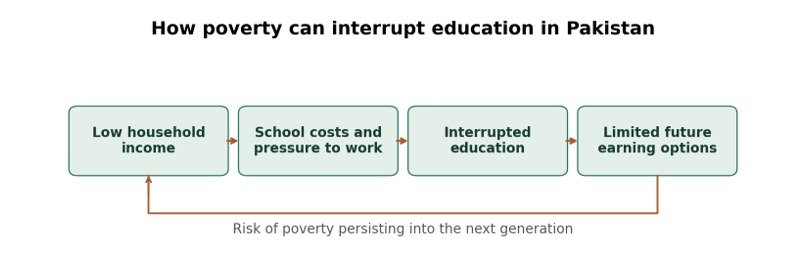
Figure 2. Conceptual illustration of the poverty–education cycle; author-created graphic.
Long-term consequences for society
The effects of educational deprivation extend beyond individual children. People who leave school without foundational skills may face restricted employment options and lower earning potential. Pakistan also loses opportunities to develop skilled workers, entrepreneurs, healthcare professionals and teachers. A workforce with stronger education and training can adapt more effectively to changing economic needs.
Limited schooling can also make it harder to understand health information, access public services and exercise legal rights. Education does not automatically eliminate poverty, and graduates may still face unemployment. Nevertheless, a combination of quality education, vocational skills and decent employment opportunities can improve economic mobility. Investing in disadvantaged children is therefore both a matter of fairness and an important part of national development.
Practical solutions and the role of government
First, financial support should reach families most at risk of withdrawing their children from school. Pakistan’s Benazir Taleemi Wazaif programme provides education-linked cash transfers to eligible children of active Benazir Kafalat beneficiaries (BISP, n.d.). Such assistance can reduce the pressure of school-related expenses. Payments should be reliable, enrolment procedures understandable and attendance requirements applied with sensitivity to disability, illness and disaster-related disruption. Free textbooks, transport assistance and targeted scholarships can complement cash transfers.
Second, public investment should prioritise underserved communities and improve the quality of existing schools. Additional classrooms are useful only if they are accompanied by trained teachers, appropriate materials and basic facilities. Education departments should regularly assess reading and mathematics skills so that children who fall behind receive timely support. School meal programmes can also help address hunger and encourage participation. In June 2025, the government and the World Food Programme held a national consultation on expanding coordinated school meal initiatives (United Nations Pakistan, 2025).
Third, children who have never attended school or have missed several years need realistic routes back into education. Accelerated learning programmes, bridge courses and recognised non-formal education can help older learners develop foundational skills and transition into suitable classes or further training. Such programmes should maintain educational standards and avoid becoming a permanent second-tier system for children from poor families. Teachers should also receive training in inclusive approaches that support learners with disabilities and those who need additional assistance.
The role of communities and individuals
Government action must be supported by communities, civil society and responsible private-sector participation. Local organisations can identify children who are not attending school, help families understand available support and organise learning activities. Community members can work with school management to identify problems such as unsafe routes, teacher shortages or missing facilities. Businesses can support transparent scholarship schemes, libraries and vocational training initiatives without replacing the state’s responsibility to provide education.
Teachers have an important role in creating classrooms where children are respected regardless of their financial circumstances. Students should not be embarrassed because they lack expensive supplies or cannot afford extracurricular activities. Schools can establish confidential systems for identifying families who need assistance. Individuals can contribute through book donations, volunteer tutoring and support for credible educational organisations. Such efforts are most useful when they respond to actual community needs and are sustained over time.
Conclusion
Poverty and educational inequality are deeply connected in Pakistan. Financial pressures, child labour, gender discrimination, inadequate facilities, hunger and environmental disruption can prevent children from entering school or completing their education. The national challenge is not only to increase enrolment but also to ensure that every child learns in a safe, supportive and effective environment.
Breaking the cycle requires coordinated action: dependable financial support, accessible public schools, qualified teachers, improved nutrition, inclusive learning and meaningful opportunities for employment. Progress should be measured through attendance, retention and learning outcomes rather than enrolment figures alone. No child should lose the opportunity to learn simply because their family cannot afford the associated costs. By treating education as a right and a long-term investment, Pakistan can create a more equitable society in which children have greater freedom to shape their futures.