
In an era dominated by artificial intelligence, automation, and unprecedented technological disruption, one human capacity remains irreplaceable: emotional intelligence (EI). Often overshadowed by traditional metrics of cognitive intelligence (IQ), emotional intelligence has emerged as perhaps the most critical predictor of personal fulfillment, leadership effectiveness, and organizational success.

Defining Emotional Intelligence
Emotional intelligence is the ability to perceive, understand, manage, and utilize emotions effectively—in oneself and in others. Popularized by psychologist Daniel Goleman in his 1995 seminal book Emotional Intelligence, the concept builds upon earlier work by researchers Peter Salovey and John Mayer, who in 1990 formally introduced the term as “the ability to monitor one’s own and others’ feelings and emotions, to discriminate among them and to use this information to guide one’s thinking and actions.”
Unlike IQ, which remains relatively stable throughout life, emotional intelligence is malleable. It represents a set of skills that can be deliberately cultivated, making it one of the most promising areas for personal development in adulthood.
The Five Domains of Emotional Intelligence
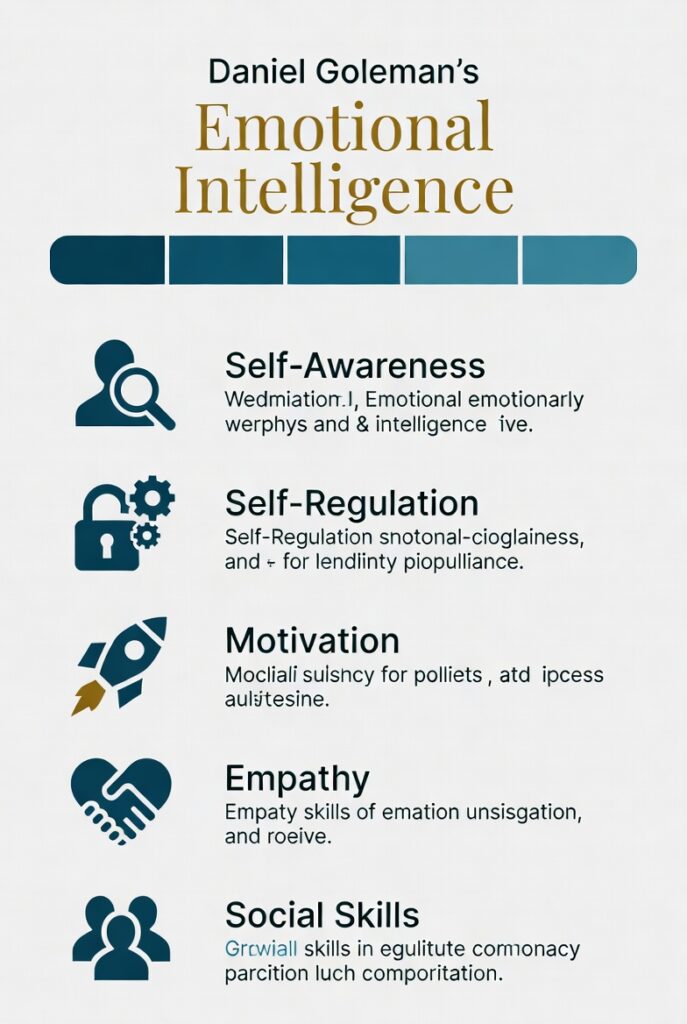
Goleman’s widely adopted framework identifies five key components:
1. Self-Awareness
The foundation of emotional intelligence. It involves recognizing one’s emotions as they occur and understanding their impact on thoughts, behavior, and performance. Highly self-aware individuals possess a realistic assessment of their strengths and limitations. They maintain a grounded sense of self-confidence that neither inflates into arrogance nor collapses into insecurity.
2. Self-Regulation
The ability to manage disruptive emotions and impulses. Self-regulated individuals maintain integrity, adaptability, and comfort with ambiguity. They transform negative emotions into constructive energy rather than being controlled by them. In high-stakes environments, this capacity separates exceptional performers from those who crumble under pressure.
3. Motivation
A passion for achievement that transcends external rewards. Emotionally intelligent people exhibit resilience, optimism, and an intrinsic drive toward goals. They view setbacks as learning opportunities rather than personal failures—a psychological orientation research has repeatedly linked to superior long-term outcomes.
4. Empathy
The capacity to understand others’ emotional makeup and respond appropriately. In our increasingly diverse and interconnected world, empathy has become a competitive advantage. Leaders with high empathy can navigate cultural nuances, resolve conflicts constructively, and build psychological safety within teams.
5. Social Skills
The culmination of the previous domains—proficiency in managing relationships and building networks. This includes influence, communication, collaboration, and change management. Individuals with strong social skills create resonance: they inspire, motivate, and bring out the best in others.
The Science Behind Emotional Intelligence
Substantial empirical evidence supports the importance of EI. A meta-analysis by researchers at the University of California found that emotional intelligence accounts for approximately 27% of variance in job performance—significantly more than IQ in many contexts. In leadership roles, the correlation becomes even stronger.
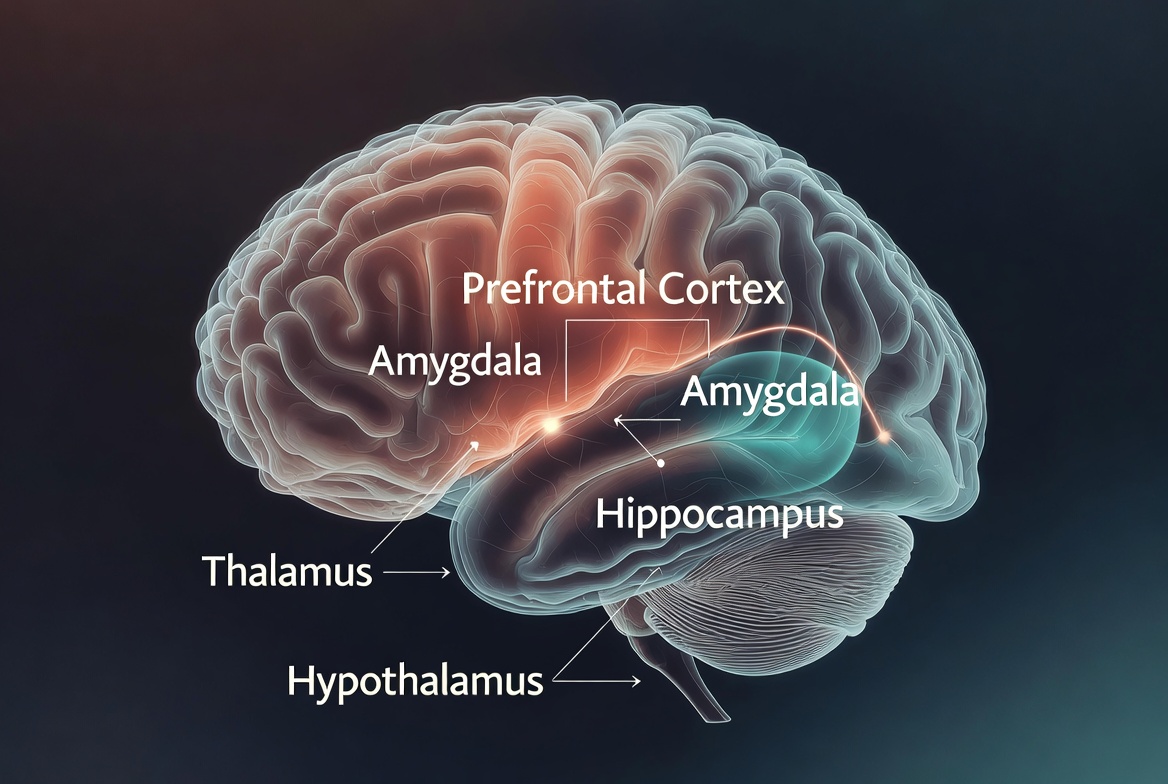
Neurologically, EI involves sophisticated interaction between the prefrontal cortex (responsible for executive function) and the limbic system (the emotional center). Neuroimaging studies reveal that individuals with higher EI demonstrate greater connectivity between these regions, enabling more effective emotional regulation.
Why Emotional Intelligence Matters Now More Than Ever
The modern workplace has undergone profound transformation. Technical skills can be outsourced or automated, but uniquely human capabilities—creativity, collaboration, ethical judgment, and emotional resonance—cannot. Research from the World Economic Forum consistently ranks emotional intelligence-related competencies among the top skills needed for 2030.
In healthcare, physicians with higher EI achieve better patient outcomes and lower burnout rates. In education, teachers with strong emotional intelligence create classrooms where students thrive academically and socially. In technology companies, engineering leaders with developed EI build teams that innovate more effectively than those focused solely on technical brilliance.
Developing Emotional Intelligence:
A Practical Framework. The good news is that EI can be systematically developed through deliberate practice:
Mindfulness Practices: Regular meditation strengthens self-awareness by enhancing metacognitive awareness—the ability to observe one’s own thoughts and emotions without immediate reactivity.
Emotional Journaling: Documenting emotional triggers, responses, and outcomes creates pattern recognition that accelerates emotional learning.
Active Empathy Training: Deliberately practicing perspective-taking by asking “What might this person be feeling and why?” before responding in difficult conversations.
Feedback Loops: Seeking 360-degree feedback and treating it as data rather than criticism builds both self-awareness and social skills.
Role Modeling: Studying individuals who exemplify high EI—whether historical figures like Nelson Mandela or contemporary leaders—provides templates for emulation.
Organizations can foster collective emotional intelligence through psychologically safe cultures, emotional literacy training, and leadership development programs that prioritize these competencies.
Case Studies in Emotional Mastery
Consider Satya Nadella’s transformation of Microsoft. Upon becoming CEO in 2014, Nadella emphasized empathy as a core value, shifting the company’s culture from internal competition to collaborative growth. The results speak for themselves: Microsoft’s market value increased from approximately $300 billion to over $3 trillion under his leadership.
In healthcare, Dr. Brené Brown’s research on vulnerability has demonstrated how leaders who embrace emotional openness create cultures of innovation and resilience. Her work reveals that what was once considered “soft” skills are, in reality, the hardest and most valuable capabilities in complex human systems.
The Philosophical Dimension
Beyond practical benefits, emotional intelligence touches on deeper questions of human flourishing. Aristotle distinguished between sophia (theoretical wisdom) and phronesis (practical wisdom)—the latter requiring emotional maturity and ethical judgment. In many ways, emotional intelligence represents the modern scientific understanding of this ancient virtue.
In an age of algorithmic decision-making, emotional intelligence preserves what makes us distinctly human: our capacity for meaning, connection, and moral reasoning. It reminds us that intelligence without emotional wisdom can become mere calculation, potentially devoid of purpose or ethical consideration.
Conclusion:
The Intelligence That Matters Most
As we navigate an increasingly complex world, emotional intelligence emerges not as a supplementary skill but as the foundational capacity that determines how effectively we deploy all our other abilities. It bridges the rational and emotional dimensions of our nature, allowing us to harness both head and heart in service of our highest goals.
The cultivation of emotional intelligence represents one of the most profound investments we can make—both individually and collectively. In mastering our inner world, we gain greater mastery over our outer circumstances. In understanding others more deeply, we build the relationships and communities that give life its richest meaning.
The question is not whether emotional intelligence matters, but whether we will commit ourselves to its development with the same rigor we apply to technical and intellectual pursuits. Those who do will likely find themselves not only more successful, but more fully human.
About the Author
Mehreen Aslam is an AI Research Analyst, Writer, and Team Motivator at UH Tech Solution. The most powerful AI systems are those developed and led by emotionally intelligent humans.